
About
Hi! I’m Dave, a PhD (DPhil) student at the University of Oxford, UK in the Department of Astrophysics. I specialise in optical instrumentation for astronomy, and also get to do some science with observational data. In my career so far I’ve built telescopes for imaging the earth from space, and now I’m helping to build an instrument for imaging space from earth using the world’s largest optical telescope, the Extremely Large Telescope (ELT).
I’m also Lead Engineer for Space Situational Awareness start-up Lumi Space. We are developing the world’s first commercial satellite laser ranging service to enable a sustainable future in space for everyone. Although specialising in optical and photonics systems, I also have experience with broader satellite systems, mission concepts, and business development.
Finally, I contribute to Astrobites, a “daily astrophysical literature journal written by graduate students in astronomy”. It’s aimed at undergraduates who want a more accessible view on recent publications.
My work and research
- HARMONI, a key first light instrument, is a visible and near-infrared integral field spectrograph which will split up the light into its constituent wavelengths to form large high-resolution data-cubes. A high throughput in the instrument is vital to derive maximum benefit from the huge collecting area of the ELT. The diffraction gratings have the lowest transmission of any of the optical components, and so their characterisation and optimisation are critical to meeting the instrument requirements. There are a total of 42 gratings, comprising 11 bespoke line densities, and so I am developing a novel automated test bench to conduct the characterisation and optimisation of the assembly process.
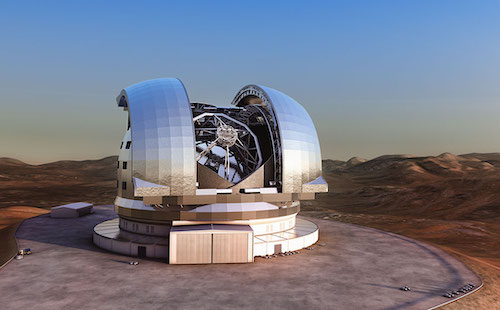
- Another delicate area of the instrument manufacture is the alignment of the large collimator mirrors. These must be aligned at room temperature and remain aligned at cryogenic temperatures. I am developing a novel alignment methodology to minimise the number of steps in this process, and the costly and time-consuming cooldown cycles to verify performance of the mirrors.
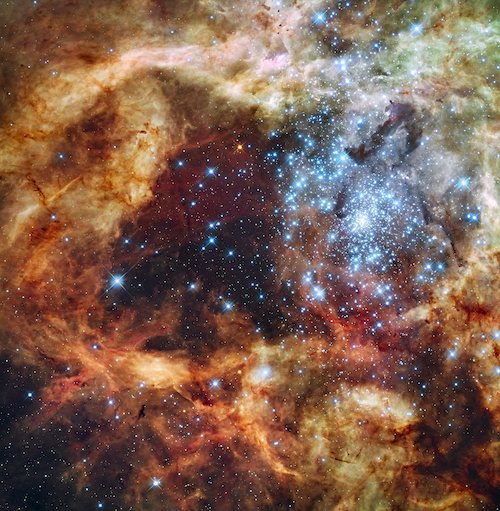
- Finally, I will be using simulated data of a star cluster to determine if HARMONI is capable of detecting an intermediate-mass black hole outside of our galaxy; a potential world first.
Lumi Space
Check out www.lumi.space to keep up to date with the company’s progress.